
Can I Still Drive if My Engine Oil Is Low?
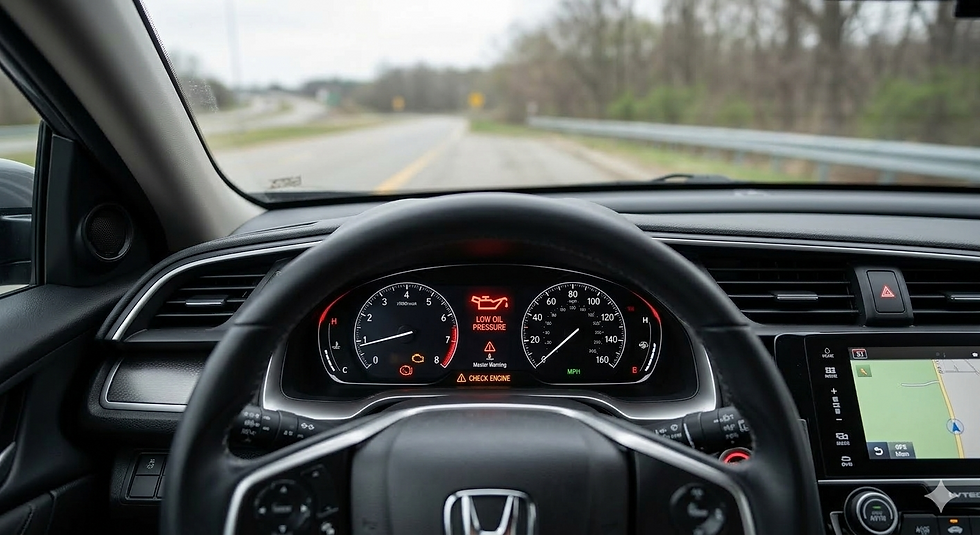
It's a situation most drivers have found themselves in at some point. You check the dipstick before a trip and it's reading low , or the oil light has flickered on while you're already on the road. You're running late, the nearest servo is a few suburbs away, and you're wondering: is it actually that bad to keep going for a bit?
It's a fair question. And the answer isn't a simple yes or no , it depends on how low the oil is, what kind of driving you're doing, how long you plan to keep going, and what your engine is already telling you. The difference between slightly low and critically low is the difference between a minor inconvenience and a very expensive repair bill.
This guide gives you the straight answer for every scenario, explains what's actually happening inside your engine when oil levels drop, and tells you exactly what to do , whether you're in suburban Brisbane or three hours from the nearest town in outback Queensland.
The Quick Answer: It Depends on How Low
Before anything else, here's the short version:
• Slightly low (between MIN and MAX, but closer to MIN): you can drive carefully to the nearest servo or shop and top up , don't delay, but don't panic either
• At or just below the MIN mark: top up as soon as possible, avoid heavy driving until you do, and keep the trip short and gentle
• Significantly below MIN or dipstick shows nothing: do not drive. Full stop. The risk of serious engine damage is real and immediate
• Oil pressure warning light on while driving: pull over immediately, switch the engine off, and do not restart until the cause is diagnosed
Everything below expands on why , and what to do in each situation.
What's Actually Happening Inside Your Engine When Oil Is Low
To understand why this matters, you need a quick picture of what engine oil is actually doing at any given moment.
When your engine is running, oil is being pumped under pressure through a network of internal galleries to every major component , crankshaft bearings, connecting rod bearings, camshaft lobes, valve train, timing chain tensioners. The oil does several things simultaneously:
• Creates a pressurised film between moving metal surfaces so they never actually touch
• Carries heat away from components the cooling system doesn't directly reach
• Suspends and transports contaminants to the filter for removal
• Acts as hydraulic fluid for variable valve timing systems and hydraulic lifters
When oil level drops, two things happen immediately: the total volume circulating decreases, and the oil pump pickup tube , which draws from the bottom of the sump , starts pulling from a shallower pool. In normal driving, the oil sloshes around with cornering, braking, and acceleration. With low oil, that sloshing can briefly expose the pickup tube, causing momentary oil starvation known as a dry pick-up event.
Even a brief interruption to oil pressure , measured in fractions of a second , can cause measurable wear on precision bearing surfaces that rely on a continuous pressurised oil film.
The more aggressive the driving , higher revs, hard cornering, steep hills, towing , the more frequently these events occur with low oil.
Driving With Low Oil: Scenario by Scenario
Scenario 1: Slightly Low , Just Below MAX
The dipstick reads in the lower half between MIN and MAX. No warning lights. No unusual noises.
Reality: the engine has adequate oil for normal operation. You won't cause immediate damage in this situation, but you're not operating with a healthy buffer. Oil level naturally drops slightly between services as the engine consumes small amounts , this is normal.
What to do: top up at your next convenient stop. Don't push hard driving, towing, or extended highway runs until you've brought the level back toward MAX. This is a maintenance task, not an emergency.
Scenario 2: At or Just Below MIN
The dipstick reads at the MIN mark or fractionally below it. No warning lights, but the level is at the lower limit of safe operation.
Reality: you're at the threshold. The engine can still function, but the margin for error is gone. Hard cornering, aggressive acceleration, or long runs on a hot day can cause momentary oil starvation. The oil that is circulating is also working harder , it's running hotter and degrading faster because there's less volume to absorb the heat load.
What to do: this is urgent but not a roadside emergency if the light isn't on. Drive gently and directly to the nearest servo or auto parts shop. Add the correct grade of oil to bring the level to MAX. Check for visible leaks under the car before continuing.
Scenario 3: Significantly Below MIN
The dipstick shows oil well below the MIN mark , or barely registers any oil at all. The warning light may or may not be on yet.
Reality: this is a genuine risk situation. The oil pump may be drawing air during normal operation, not just during aggressive manoeuvres. Oil pressure will be intermittent or insufficient. If the light isn't on yet, it's only because the sensor hasn't tripped , the damage can still be happening.
What to do: do not keep driving. Pull over safely. If you have oil with you, add it and check the level before attempting any further driving. If you don't have oil and you're in a populated area, call for roadside assistance or get someone to bring you oil. If you must move the car a very short distance , into a car park or off a busy road , do so extremely slowly and switch the engine off as quickly as possible.
Scenario 4: Oil Pressure Warning Light On
The red oil can symbol is illuminated on the dashboard while the engine is running.
Reality: this is a critical warning. The oil pressure sensor has detected pressure below the minimum safe threshold. At this point, critical components , primarily the crankshaft and connecting rod bearings , may not be receiving adequate lubrication. Continuing to drive risks bearing failure, crankshaft damage, or in severe cases, engine seizure.
What to do: pull over safely and switch the engine off immediately. Do not restart the engine and drive to a workshop , even if it 'seems fine' after stopping. Check the oil level. If it's low, add oil and wait a few minutes before starting. If the level is normal, the issue may be a failing oil pump, blocked pick-up tube, or faulty sensor , all of which require professional diagnosis before the car is driven again.
Scenario 5: Low Oil Warning on a Long Remote Drive
You're on the Nullarbor, the Stuart Highway, or a remote Queensland station track, and you've just noticed the oil is low. The nearest town is 150 km away.
Reality: remote Australia changes the calculus significantly. The decision between driving carefully to the next town versus waiting for roadside assistance depends on:
• How low the oil is , slightly low is different from critically low
• Whether any warning lights are showing or unusual noises are present
• The road conditions , sealed highway driving is gentler on oil than corrugated dirt tracks
• Whether you have any spare oil on board
Practical guidance: every vehicle travelling remote Australian roads should carry at least one litre of the correct engine oil. It costs almost nothing to keep a bottle in the boot, and in this exact scenario, it's the difference between topping up and continuing your trip versus being stranded. If you have oil, add it, monitor the dipstick and dashboard closely, and drive gently to the next service point. If you have no oil and the level is critically low, you're calling for roadside assistance , because driving a critically oil-starved engine across 150 km of remote highway is a very reliable way to destroy it.
How Far Can You Actually Drive With Low Oil?
This is the question everyone wants a number for, and the honest answer is: there's no reliable figure.
The distance an engine can tolerate low oil before sustaining damage depends on:
• How low the oil actually is , a litre low versus three litres low are completely different situations
• Engine design , some engines have better oil control and larger sump capacities than others
• Driving conditions , gentle suburban driving at low revs is far less demanding than highway speed, towing, or performance driving
• Ambient temperature , hot conditions increase oil consumption and thermal stress
• Engine age and condition , a worn engine with tighter oil control is more sensitive to low levels than a well-maintained newer unit
What's documented is that most oil-related engine failures don't happen at the moment the oil runs low , they happen over a period of driving while the owner ignores the warning signs. The oil pressure light blinks, they ignore it. The knocking starts, they turn up the radio. By the time they acknowledge the problem, the bearings are already damaged.
There is no safe answer to 'how far can I push it'. The correct answer is: don't push it at all.
What Happens to the Engine the Longer You Keep Driving
Here's the progression of damage that occurs when a low-oil situation is ignored or pushed through:
Minutes 1–5: Increased Wear Begins
Oil film thickness on bearing surfaces starts to reduce. Metal-to-metal contact becomes more frequent. The wear that normally takes thousands of kilometres begins occurring at an accelerated rate. You may not notice anything , or you might hear a faint ticking from the valve train as hydraulic lifters lose their pressure cushion.
Minutes 5–20: Heat Builds, Oil Degrades Faster
With less oil volume to absorb heat, the remaining oil runs hotter. Hotter oil thins further and provides less protection. The engine temperature begins to climb above its normal operating range. The oil's additive package is being consumed faster than normal. You may notice the temperature gauge sitting higher than usual.
Minutes 20+: Audible Warning Signs
The classic deep, rhythmic knock from the bottom of the engine , connecting rod bearing knock , may become audible. This sound means the oil film on the crank bearings has broken down and metal is contacting metal. This is not a recoverable situation if it continues.
Beyond This Point: Catastrophic Risk
Continued driving with bearing knock risks scoring of the crankshaft journals, complete bearing failure, connecting rod failure, and in the worst cases, a rod punching through the engine block , colloquially known as 'throwing a rod'. At this stage, the engine requires either a complete rebuild or replacement. There is no quick fix.
What Ignoring Low Oil Actually Costs
Here's the financial reality of the different outcomes:
Outcome | Estimated Cost (AUD) | Avoidable With |
Topping up oil at servo | $10–$25 | A bottle of oil in the boot |
Full oil and filter service | $80–$180 | Regular servicing on schedule |
Valve train repairs (lifters, cam followers) | $400–$1,500 | Catching low oil before damage |
Engine bearing replacement | $1,000–$3,500 fitted | Not ignoring the oil pressure light |
Crankshaft resurfacing or replacement | $1,500–$4,500 | Pulling over when knock starts |
Full engine rebuild | $4,000–$10,000+ | Any of the above actions, taken earlier |
Engine replacement | $6,000–$15,000+ | Any of the above actions, taken earlier |
What Every Aussie Driver Should Keep in Their Car
Prevention is always cheaper than cure. Here's a simple kit that costs almost nothing and covers you in the most common situations:
• One litre of the correct engine oil for your vehicle , check the owner's manual for grade, note it on a sticker inside the fuel cap, and keep a bottle in the boot. Replace it when you use it
• A clean rag or disposable glove for checking the dipstick without making a mess
• Your roadside assistance contact , NRMA, RAA, RACV, RACQ, or RAC depending on your state. Many memberships now include roadside oil delivery for exactly this situation
•The correct oil grade noted somewhere accessible , phone notes, the glove box, or as a sticker inside the bonnet. The wrong grade is better than nothing in an emergency, but the right grade is always preferable
If you drive in remote areas of Australia , outback Queensland, the NT, WA station country, or along unmaintained tracks , carrying two litres of oil is a very small insurance policy against a potentially very large problem.
The Role Your Oil Filter Plays in All of This
Low oil and a neglected oil filter are problems that often arrive together , and they compound each other.
When an oil filter is well past its service life and operating in permanent bypass, the oil circulating through the engine is carrying all the contaminants accumulated over that service period. That contaminated oil degrades faster, forms deposits on internal surfaces, and can contribute to gallery blockages that further restrict oil flow and pressure.
An engine running on low oil that is also dirty and contaminated , because the filter hasn't been changed on schedule , is in a significantly worse position than an engine that's just low on clean oil. The oil that is there is working much harder and offering much less protection.
Keeping the oil filter on schedule isn't a separate issue from managing oil levels , it's part of the same system. A fresh filter with adequate clean oil gives the engine its best chance. A clogged filter running in bypass with low contaminated oil is the worst-case combination.
How to Make Sure You're Never in This Situation
Check the Dipstick Monthly
It takes two minutes. Park on level ground, wait for the engine to cool for a few minutes after running, pull the dipstick, wipe it clean, reinsert fully, then pull and read. Aim to keep the level in the top half between MIN and MAX. Do this once a month and you'll catch any developing oil loss trend well before it becomes a problem.
Know Your Vehicle's Oil Consumption Baseline
Some engines consume more oil than others. An older vehicle might use half a litre every 3,000 km , and that's normal for that engine. Knowing your baseline means you know when consumption has increased, which is often the first sign of a developing issue like worn valve seals or piston rings.
Service on Schedule , Oil and Filter Together
Every oil change should include a new filter. Not every second service. Not when you remember. Every time. A filter that's past its capacity forces the bypass valve open, which means dirty oil circulates unfiltered, degrading faster and carrying more abrasive particles. That accelerates oil consumption through increased component wear and can contribute to seal degradation and leaks.
Investigate Oil Loss, Don't Just Top Up
If you find yourself regularly adding oil between services, that's the engine telling you something. Check for external leaks , look at the ground where the car parks, check the underside of the engine for residue, inspect the valve cover and sump gasket areas. If there's no external leak, the engine is burning oil internally. Both situations deserve a proper look rather than an ongoing top-up routine.
Carry Spare Oil for Remote Driving
This one is specific to Australia and it's non-negotiable for anyone venturing into regional or remote areas. Keep at least one litre of the right grade in the boot. It weighs almost nothing, costs $10–$20, and has the potential to save your engine , and your trip.
The Bottom Line
Can you still drive with low engine oil? Briefly, carefully, and only if the level is marginally low and no warning lights or noises have appeared. In any other situation , critically low, oil light on, engine knocking , the answer is no, and pushing through risks turning a $20 problem into a $10,000 one.
The frustrating reality is that engine damage from low oil is almost entirely avoidable. A monthly dipstick check, a bottle of oil in the boot, and services done on time are all it takes to make this a non-issue for the life of your vehicle.
Don't gamble with it. The engine is the most expensive component in your car, and it's counting on you to look after it.
Frequently Asked Questions
What happens if I drive with the oil light on?
The oil pressure warning light means the engine is not receiving adequate oil pressure to safely lubricate its critical components. Continuing to drive , even for a short distance , risks severe and potentially irreversible damage to engine bearings, the crankshaft, and in extreme cases, a complete engine seizure. When the light comes on while driving, the correct response is to pull over safely, switch off the engine, and not restart it until the cause has been identified and addressed. Check the oil level first , if it's critically low, add oil before attempting to start again. If the level appears normal, the issue may be a pump failure, blocked pick-up, or faulty sensor, and the car should be towed to a workshop rather than driven.
Can low oil damage an engine permanently?
Yes, absolutely. The most common form of permanent damage from low oil is bearing wear , the crankshaft and connecting rod bearings rely on a continuous pressurised oil film to prevent metal-to-metal contact. Once that film breaks down due to insufficient oil pressure, the bearing surfaces score and wear. Mild scoring can sometimes be addressed through bearing replacement, but severe damage , including scoring of the crankshaft journals themselves , typically requires either crankshaft machining or replacement, or a full engine rebuild. In the most severe cases, where a connecting rod bearing fails completely, the rod can damage the engine block beyond repair. The degree of permanent damage depends directly on how long the engine was operated in a low-oil condition.
How much oil does it take to top up safely?
Add oil in small increments , around 200 to 300 millilitres at a time , and recheck the dipstick after each addition. The distance between the MIN and MAX marks on most dipsticks represents approximately one litre of oil. If the level is at MIN, adding one litre should bring it close to MAX. The key is not to overfill: oil above the MAX mark can foam under the crankshaft, leading to aerated oil that doesn't lubricate properly and can damage seals under excessive pressure. Always use the grade specified in your owner's manual or on the oil filler cap. In an emergency where the correct grade isn't available, a higher-quality oil in an adjacent viscosity grade is preferable to running critically low , but get it properly sorted at the next service.


Comments