
Signs of Worn Car Suspension ,What to Look For

Most Australian drivers are pretty good at noticing when something feels obviously wrong with their car. A flat tyre? You know about it immediately. A dead battery? The car won't start. But problems that develop slowly ,the kind that creep up over thousands of kilometres on our notoriously rough roads ,are much easier to miss. You adapt your driving to compensate without even realising you're doing it, until one day a mechanic puts the car on the hoist and tells you the bill is going to hurt.
Worn components in the undercarriage are a classic example of exactly this problem. They don't usually fail all at once. They degrade gradually ,over potholes, through corrugations, across speed humps, and around corners ,losing their effectiveness so slowly that the change in how your car drives can become your new normal. That gradual change is dangerous, because worn components affect your ability to brake, steer, and control the car in exactly the situations where you need those things most.
This guide covers every warning sign worth knowing about ,what causes it, what it feels like, how to test for it at home, and when you need to act on it urgently versus when you have a bit more time.
Quick Reference: 10 Warning Signs at a Glance
Here's every major warning sign, what it indicates, and how urgent the action is:
Warning Sign | Likely Component | How to Spot It | Action | Urgency |
Excessive bouncing | Shocks / struts | Bounce test at each corner | Get it checked promptly | Urgent |
Clunking / knocking noises | Ball joints, bushes, worn shocks | Hear it over bumps and speed humps | Inspect and repair soon | Urgent |
Vehicle pulling to one side | Worn control arm, bad bushing, misalignment | Consistent pull during straight-line driving | Alignment + inspection | Moderate |
Nose-dives under braking | Worn front struts / shocks | Front dips sharply when you brake | Urgent ,safety risk | Urgent |
Rear squats under acceleration | Worn rear shocks | Rear drops when you accelerate | Inspect soon | Moderate |
Excessive body roll in corners | Worn sway bar or links, worn shocks | Car leans heavily in turns | Inspect and replace | Moderate–Urgent |
Uneven / cupped tyre wear | Worn shocks causing bounce on tyres | Scalloped pattern around tyre edge | Check shocks + alignment | Moderate |
Sagging ride height (one corner) | Broken / weakened coil spring | One corner sits lower than the others | Inspect immediately | Urgent |
Steering wheel shimmy | Worn ball joints, tie rod ends | Vibration felt through the wheel | Inspect soon | Moderate |
Oil on shock body | Leaking shock absorber | Oily wet residue on the shock body | Replace shocks | Urgent |
* Urgency ratings are general guides only. Always have a qualified mechanic inspect your vehicle ,only a professional can accurately diagnose the specific component that needs attention.
The Safety Reality Research consistently shows that worn shock absorbers can increase stopping distances by up to 20%. On a wet road at 100 km/h, that's the difference between stopping safely and a serious accident. Poor suspension doesn't just affect your comfort ,it directly affects your ability to control the car in an emergency. |
The Signs in Detail: What Each One Actually Feels Like
1. Excessive Bouncing After Bumps

This is the most telling symptom, and the easiest to test at home. When you drive over a speed hump, pothole, or road join, your car should absorb the impact and settle back to normal within one rebound. If the car continues bouncing two, three, or more times after the impact ,like a mattress with broken springs ,your shock absorbers or struts have lost their damping ability.
The bounce test is a simple home check: push firmly down on each corner of the car (bonnet, boot, and both rear quarter panels), then release. The car should rise and settle immediately. If it continues to bob and oscillate, that corner's shock is likely gone.
In Australia, this problem is common earlier than many drivers expect because of our road quality. Corrugated outback tracks, suburban potholes, and poorly maintained country roads put far more cycles on shock absorbers than smooth highway driving. By 80,000–100,000 km, most factory shocks are well past their prime ,and many show signs of wear much earlier depending on road conditions and load.
2. Clunking, Knocking, or Banging Noises Any unusual noise from under the car when you drive over bumps, speed humps, or rough patches deserves attention. A clunking or knocking sound is often one of the most alarming symptoms ,and rightly so. It can indicate several different worn components:
• Worn or loose shock absorbers: The internal components of a worn shock can rattle inside the cylinder, producing a distinct knock over rough surfaces.
• Worn ball joints: Ball joints allow the wheel hub to pivot and move. When the ball joint is worn, there's play in the joint that produces a clunk, particularly when the wheel drops into a pothole or rises over a bump. This is one of the more dangerous causes ,a failed ball joint can cause immediate loss of wheel control.
• Worn or cracked bushings: Rubber bushings cushion the joints where components connect to each other and to the chassis. When they crack, harden, or collapse, metal-on-metal contact produces knocking and clunking sounds.
• Sway bar end links: End links connect the sway bar to the strut or control arm. When they wear out, they clunk noticeably ,particularly on uneven surfaces where one wheel rises while the other drops.
Don't try to diagnose the specific source by ear alone. Get it on a hoist at a qualified workshop. Sounds can travel and echo in unexpected ways under a car, and what sounds like it's coming from the front right might actually be originating elsewhere.
3. The Car Pulls to One Side

If your car consistently drifts left or right during straight-line driving ,even on a flat, level road ,something is wrong with either the alignment or the components that maintain it. While a simple wheel alignment issue can cause this, a worn control arm bushing, damaged control arm, or worn strut mount can cause the alignment to go out and then resist being corrected, or pull out of alignment again quickly after correction.
A car that pulls to one side is not only annoying ,it means you're constantly making corrections, which is tiring on long drives and potentially dangerous if something else unexpected happens while you're managing the drift.
If you've recently had an alignment and the car is already pulling again within a few thousand kilometres, the alignment is a symptom, not the cause. A worn component is pulling the wheel out of spec. The alignment will keep going out until that component is replaced.
4. Nose-Diving Under Braking
Here's one that drivers often write off as 'normal' ,but it isn't. When you brake firmly, the weight of the car transfers forward. Good front struts control and manage this weight transfer. When front struts are worn, the nose of the car dips sharply and excessively as the front suspension compresses more than it should.
This matters enormously for safety. When the front dives, the rear lightens up ,which means the rear tyres have less grip. In an emergency stop, this makes the car harder to control. Combined with the fact that worn shocks increase braking distance by up to 20%, nose-diving under braking is one of the clearest signs that something urgent needs attention at the front end.
Test it carefully: in a safe, empty carpark or quiet road, brake firmly from about 40 km/h. If the front of the car dips noticeably and takes a moment to recover, your front struts or shocks are likely well past their best.
5. Excessive Body Roll in Corners
Every car has some body roll in corners ,the body leaning to the outside as you turn. But excessive body roll ,where the car leans significantly and feels like it's going to tip ,indicates that the components designed to resist this movement have worn out.
The two main culprits are the shock absorbers (which control how quickly the body moves) and the sway bar links (which physically connect the sway bar to the strut and resist roll). When either wears out, corners feel vague, unstable, and unsettling ,particularly at highway speeds or in emergency lane-change manoeuvres.
Excessive body roll is not just uncomfortable ,it reduces the traction on the inside tyres of a corner, making the car less stable and harder to control during sudden steering inputs. If a corner feels like it requires constant concentration to manage the car's lean, that's worth having checked.
6. Uneven or Cupped Tyre Wear

Next time you rotate your tyres, look at the wear pattern carefully. Normal wear is relatively even across the tread. Cupping or scalloping ,an irregular pattern where certain spots around the tyre are worn lower than others, creating a wavy or pocked surface ,is a specific wear signature caused by the wheel bouncing on and off the road surface.
When shocks or struts are worn, the wheel doesn't maintain consistent contact with the road. Instead, it bounces at certain frequencies ,and every time it contacts the road at speed, it creates a pressure point that wears the tyre at that spot. The result is the distinctive cupped pattern that, once you know what to look for, is immediately recognisable.
Cupped tyres are not just a waste of money ,they're also noisier on the road and have less grip than a tyre with even wear. If you see cupping, you need to address the shock absorbers as well as replace the tyres ,otherwise the new tyres will cup again quickly on the same worn shocks.
7. Oil or Fluid on the Shock Body

This one is easy to check and easy to understand. Shock absorbers work hydraulically ,they use oil and compressed gas to control the damping force. When the seal inside the shock fails, that oil leaks out and you'll see a wet, oily residue coating the outside of the shock body. Sometimes the fluid collects dirt and grime, making the shock look caked with a greasy black residue rather than shiny wet.
A leaking shock absorber is not going to get better on its own. As it loses fluid, it progressively loses its ability to damp movement ,which means the problem gets worse over time, not better. Once you see a leaking shock, it's past its effective life and needs replacement.
To check, look through or behind your wheels at the shock absorber body. If you're not sure what you're looking at, your mechanic can check on the hoist during a regular service ,it's a simple visual inspection that adds nothing to the time.
8. One Corner Sits Lower Than the Others

Park your car on level ground and take a step back. If one corner of the car sits noticeably lower than the other three ,or the car has a visible lean to one side ,a coil spring in that corner has likely broken or significantly weakened. Springs are designed to last the life of the vehicle under normal conditions, but they can crack under impact (hitting a pothole at speed, for instance), corrode in environments with lots of moisture, or fatigue prematurely under constant overloading.
A broken spring is an urgent repair. Without it, that corner is running on the shock absorber alone ,which is not designed to carry the vehicle's weight without spring support. The ride height on that corner will be lower, the geometry will be wrong, and in a worst-case scenario, a broken spring can puncture a tyre or contact other components, causing loss of control.
9. Steering Wheel Vibration or Shimmy
A steering wheel that shakes, vibrates, or shimmies ,especially at certain speeds or over bumps ,can have several causes, but worn ball joints and tie rod ends are common culprits. Ball joints allow the wheel hub to pivot as you steer; tie rod ends connect the steering rack to the wheel hub. When either wears out, there is looseness in the connection that translates into imprecise, shaky steering.
At highway speeds, a shimmy can feel alarming ,and it should. Worn ball joints are a serious safety concern: in extreme wear, a ball joint can separate completely, which causes the wheel to move uncontrollably. This is rare but not unheard of ,particularly in older vehicles or those that have been heavily loaded or frequently driven on rough roads.
10. A Generally Rougher Ride Than Usual
Sometimes there's no single dramatic symptom ,just a gradual sense that the car doesn't ride the way it used to. Bumps that used to be absorbed are now transmitted more directly into the cabin. The car feels less composed, less planted, less comfortable. Trust that feeling.
Shock absorbers wear gradually, and gradual changes are easy to normalise. But if you've noticed over recent months that the ride has become noticeably harsher ,or if you get in someone else's similar-age car and it rides noticeably better ,that's a meaningful signal. Shocks and struts are often overlooked in regular servicing because they're not a standard wear item that gets flagged like brake pads or tyres. Many mechanics won't check them unless you specifically ask or until there's an obvious problem.
At 80,000–100,000 km, it's worth proactively asking your mechanic to inspect the shocks and struts ,even if the car still 'feels fine'. What seems fine to a driver who's adapted to gradual wear often looks very different to a trained eye on the hoist.
Three Home Tests You Can Do Right Now
You don't need a workshop hoist or specialist tools to do a basic check. These three tests take about five minutes in your driveway and can tell you a lot.
The Bounce Test
Push firmly down on each corner of the car ,front left, front right, rear left, rear right. Release and watch what happens. A car in good condition will rise back to its normal height and settle immediately ,one smooth rebound with no oscillation. If the corner continues bouncing up and down two or three times after you release, the shock absorber at that corner is worn and not damping the spring's movement effectively.
Do this at all four corners individually. A shock that's worn at one corner will behave differently from the others, making it easier to identify the problem corner.
The Visual Check
Walk around the car and compare the ride height at each corner ,the gap between the top of the tyre and the wheel arch. They should all be roughly equal. If one corner sits noticeably lower than the others, a spring is likely broken or significantly weakened in that corner.
If you can see the shock absorber through or behind the wheel, look for oil residue or grime build-up on the shock body. A clean, dry shock is doing its job. A wet or grime-coated shock is leaking fluid and losing effectiveness.
The Braking Test
Find a safe, empty space ,a quiet carpark or empty road ,and brake firmly from 40 km/h. Note whether the front of the car dips sharply and takes a moment to recover (poor front struts), or whether it stays relatively composed. Note also whether the car pulls to one side under braking ,this can indicate uneven wear across the struts or a problem with one side specifically.
Important: Do this test responsibly. Confirm the area is genuinely clear before testing, and don't do it at speeds that could put you or anyone else at risk.
Understanding What's Actually Wearing Out
Different symptoms point to different components. Here's a brief guide to the main components that wear in a typical Australian car and what happens when they do:
Shock Absorbers and Struts
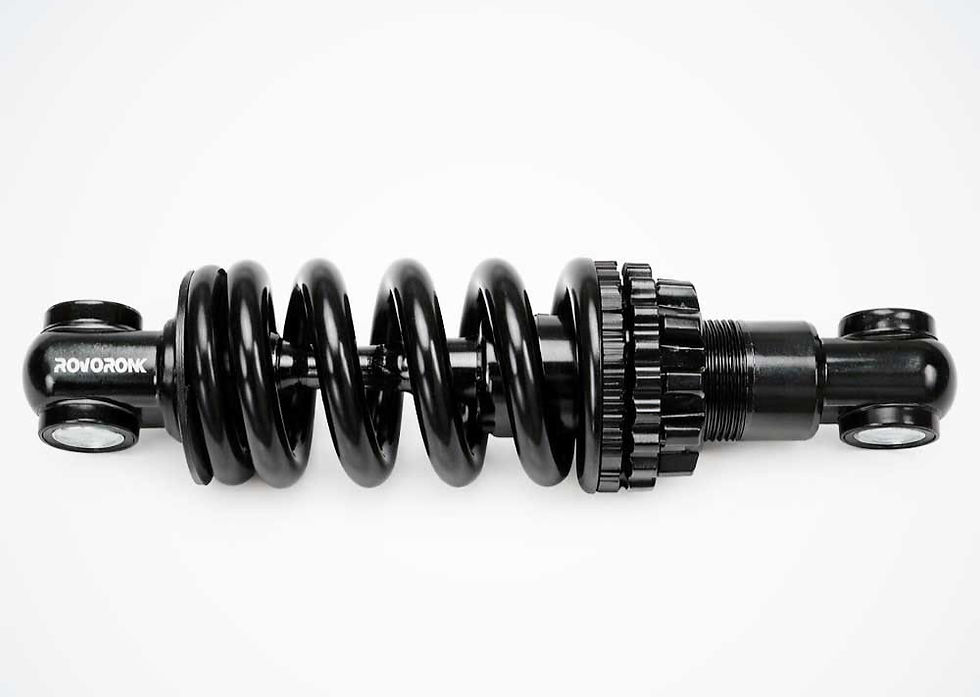
Shocks and struts are the most commonly worn components, and they're the most impactful on ride quality and safety. A shock absorber cycles up and down over two million times every 30,000 km on average ,and each of those cycles degrades the oil and seals inside very slightly. Over time, that degradation adds up to reduced damping effectiveness, fade under extended hard use, and eventually leaking seals.
Struts are a combined unit (shock + spring in one assembly), most commonly used at the front of modern cars. When struts go, they affect not just ride quality but alignment ,because the strut is also a structural mounting point for the wheel hub.
Coil Springs

Coil springs are designed to last the vehicle's lifetime under normal conditions, but
In Australia, springs are stressed by two conditions in particular: loading (add enough bullbar, camping gear, and passengers and a spring that was sized for factory spec is running near its limit) and corrugated roads (which cycle the spring rapidly through its range at high frequency).
Ball Joints and Control Arms

Ball joints allow the wheel hub to pivot as the wheel moves up and down and as you steer. They're a safety-critical component ,a ball joint that separates while driving causes immediate loss of wheel control. Modern ball joints are generally quite durable, but they wear faster in Australian conditions: outback dirt roads, river crossings, and heavy off-road use all accelerate wear.
Control arms locate the wheel in the correct position relative to the chassis. When the bushings at the control arm mounts wear out, the arm can move out of its correct position under load, causing pulling, uneven tyre wear, and clunking noises.
Sway Bars and End Links

The sway bar (or anti-roll bar) connects the left and right suspension together to resist body roll in corners. End links are the short rods that connect the bar to the strut or control arm. End links are a high-wear, low-cost item ,they're often the first thing to go on a car that's been driven hard, and their failure produces a very distinctive clunk when one wheel rises relative to the other. The good news is they're relatively inexpensive to replace.
When to Get It Checked ,Urgency Guide
Not all symptoms require the same speed of response. Here's a practical guide:
Get It Checked This Week ,Urgent
|
Get It Checked at Your Next Service (Within 3 Months) → The car bounces more than once after speed humps but otherwise handles okay → You notice gentle pulling to one side that an alignment might not have fixed → The ride has become noticeably rougher over recent months → You're over 80,000 km and haven't had a suspension inspection recently → You notice cupped or uneven tyre wear after a rotation → There's occasional mild squeaking from the undercarriage on bumps |
Why Australian Roads Are Harder on Your Car
Australian roads present a uniquely challenging combination for vehicle components. Urban roads in cities like Sydney, Melbourne, and Brisbane are notoriously potholed ,years of temperature cycling and heavy vehicle traffic take a toll that's poorly maintained in most council areas. Regional and outback roads subject vehicles to corrugations, bulldust, and rough unsealed tracks that cycle components far more rapidly than smooth highway driving. And Queensland and coastal environments add humidity and salt air that accelerates corrosion of metal components including springs and control arm bushings.
The result is that Australian cars often show wear at lower mileages than the same models driven in countries with better road quality. A rough Aussie rule of thumb: inspect your shocks and struts at 80,000 km, regardless of how the car feels. On corrugated dirt roads or in harsh environments, inspect earlier ,around 50,000–60,000 km. And if you add significant weight (accessories, towing, heavy loads), those components stress faster than the factory mileage guide would suggest.
The Aussie Reality Australian Consumer Law gives you rights when components fail prematurely. If a shock or strut fails well before a reasonable expected lifespan, and the vehicle was used in normal conditions, you may have rights to a repair, replacement, or refund under ACL ,regardless of whether the manufacturer's warranty has expired. Talk to the shop or to Fair Trading if you believe a component has failed unreasonably early. |
Frequently Asked Questions
How long should shock absorbers last in Australia? Under normal driving conditions on sealed roads, quality factory shock absorbers typically last 80,000–120,000 km before showing meaningful degradation. However, Australian road conditions can significantly shorten this. Regular driving on corrugated dirt roads, frequent heavy loading (camping gear, accessories, towing), and exposure to harsh environments (salt, heat, dust) all accelerate wear. A rough but practical guide for Australian conditions: inspect shocks and struts at 60,000–80,000 km in normal urban and suburban use; at 40,000–60,000 km if you regularly drive on dirt or outback roads; and annually for vehicles that see heavy off-road use or consistent overloading. Remember that shocks wear gradually ,by the time they're 'obviously' bad, they've often been degraded for a significant period already. |
Can I drive with worn suspension components? Technically yes, but whether you should is a different question. Minor wear ,slightly reduced ride quality, mild bouncing ,is not immediately dangerous and gives you time to get to a workshop. But several symptoms indicate genuinely dangerous conditions that should not be ignored: nose-diving under braking (increases stopping distance), clunking that could indicate a worn ball joint (which can separate), one corner sitting visibly lower (could indicate a broken spring that might contact a tyre), and excessive body roll (reduces tyre grip in corners and during emergency manoeuvres). If you're unsure which category your symptoms fall into, err on the side of caution and get it inspected. Driving on genuinely worn components also accelerates wear on tyres, other suspension parts, and steering components ,turning a $600 shock replacement into a much larger repair bill. |
Do I need to replace shocks in pairs? Yes, as a general best practice. When one shock on an axle is worn, the other is typically at a similar stage ,they've experienced the same road conditions and the same number of cycles. Replacing only one shock leaves a mismatched pair: one side stiff and responsive, the other soft and degraded. This creates handling imbalance that can feel unpredictable in corners or during emergency manoeuvres. Most reputable mechanics will recommend replacing shocks in pairs (both fronts or both rears together), and in some cases all four if the vehicle's mileage and condition warrants it. The additional cost of replacing a pair versus a single unit is rarely as large as it first appears ,much of the labour cost in replacing shocks is getting the vehicle on the hoist and removing wheels and components, work that covers both sides simultaneously. |
The Bottom Line
The single most useful thing you can do is pay attention to how your car feels and sounds ,and trust it when something changes. The shift from 'feels fine' to 'definitely has a problem' is rarely sudden. It's usually a gradual drift that's easy to write off as the road being rough, the weather being cold, or just the car getting older.
The problem is that the gradual changes happen in exactly the components that matter most for safety ,braking, steering, and cornering control. A car that handles 20% worse than it should in an emergency stop or evasive manoeuvre is not a minor inconvenience. On Australian roads, with the speeds and distances involved, it's a genuine risk.
Have a mechanic inspect the undercarriage at 80,000 km whether or not it seems necessary. Ask specifically about shocks, struts, ball joints, and control arm bushings ,they're not always checked in a standard service unless you ask. And if you notice any of the symptoms described in this guide, don't wait for it to get obvious before getting it looked at. The earlier you catch it, the cheaper and safer the fix.


Comments