
Most Important Car Maintenance to Do
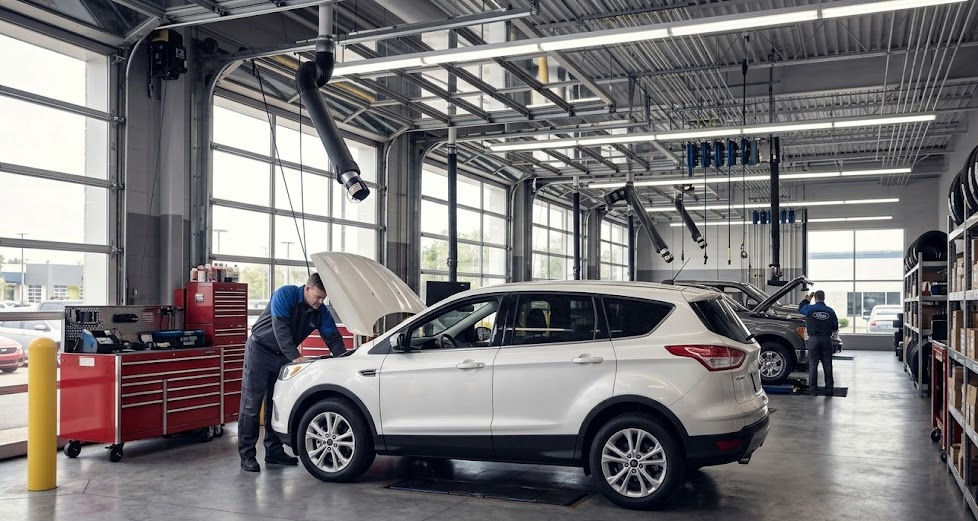
Most car owners know they should service their vehicle regularly. But ask them which service actually matters most and you'll get a range of answers - oil changes, tyre pressure, brakes, coolant. All of them are correct, and all of them are incomplete. The challenge isn't knowing that maintenance matters. It's knowing what is the most important car maintenance to do have the biggest impact on safety, reliability, and long-term cost - and prioritising those.
This guide cuts through the noise and ranks the most important maintenance tasks for Australian drivers specifically, with the context of our climate and driving conditions front of mind. A car in Darwin or outback Queensland faces very different stresses to one doing city commutes in Melbourne. Both need maintenance, but the priorities and intervals shift.
Whether you're the type who logs every service or someone who's been meaning to book the car in for months - this is the guide to get you back on track.
Number One - Oil Change
If there is one maintenance task that separates cars that reach 300,000 km from those that die at 130,000 km, it is the oil change. Engine oil lubricates every moving part inside the motor - crankshaft bearings, camshaft lobes, piston rings, valve stems. When oil degrades, those surfaces begin to make direct metal-to-metal contact. Wear accelerates. Sludge forms. Oil passages clog. And the engine begins a slow decline that ends in a very large bill.
For most modern Australian vehicles, the service interval is every 10,000 km or six months, whichever comes first. If you drive predominantly short distances in urban traffic - Sydney, Melbourne, Brisbane - consider a shorter interval of 7,500 km, because short trips don't allow the engine to fully warm up, which means condensation and unburnt fuel contaminate the oil faster than highway driving does.
In hot-climate areas - Queensland, the NT, inland WA - oil degrades faster under sustained heat. The six-month time limit is more relevant here than the kilometre count, particularly for vehicles used for regular towing. An oil change costs $80-$150. A replacement engine costs $4,000-$20,000. The arithmetic on preventive maintenance has never been complicated.
Warning The Oil Dipstick - Check It Monthly
Don't wait for the service light. Pull the dipstick monthly, wipe it clean, reinsert it, and check two things: level (between min and max marks) and condition (amber to light brown = healthy; black and gritty = overdue). Two minutes, every month, catches problems before they become expensive.
The Full Maintenance Priority Table
Here is every major service item ranked by impact on safety and longevity:
Service Item | Standard Interval | Australian Conditions | Why It Matters |
Oil and filter change | Every 10,000 km or 6 months | Every service | #1 priority - neglect causes engine failure |
Tyre pressure check | Monthly | Weekly if towing | Affects safety, economy, and tyre life |
Brake inspection | Every 20,000 km | Every 10,000 km if towing | Safety-critical - never skip |
Air filter replacement | Every 20,000-30,000 km | Every 15,000 km (dusty roads) | Affects fuel economy and engine breathing |
Tyre rotation | Every 10,000 km | Every 8,000 km if front-heavy car | Extends tyre life significantly |
Battery check | Annually | Every 6 months (hot climates) | Heat kills batteries - QLD/WA/NT critical |
Coolant flush | Every 2-3 years | Every 2 years (hot climate) | Overheating is a top cause of engine failure |
Brake fluid replacement | Every 2 years | Every 18 months | Absorbs moisture - reduces braking effectiveness over time |
Spark plug replacement | Every 40,000-100,000 km | Per manufacturer | iridium plugs last longer; conventional need more frequent changes |
Timing belt/chain | 80,000-100,000 km (belt) | Never skip belt service | Chain failure or belt snap = engine write-off |
* Intervals are guides. Always refer to your owner's manual for manufacturer-specific schedules. Australian conditions often warrant shorter intervals than the manual specifies.
Tyres - The Part of the Car That Actually Touches the Road
Every braking force, every cornering force, every acceleration input passes through a contact patch roughly the size of your hand between the tyre and the road surface. The condition of those four contact patches determines whether your car stops in time when something runs across the highway at night - or doesn't.
The legal minimum tread depth in Australia is 1.5mm. The safe minimum is closer to 3mm - particularly in the wet, where tread depth directly determines how effectively the tyre evacuates water and maintains grip. A tyre at 1.6mm on a wet highway in Queensland is technically legal and genuinely dangerous.
* Check tyre pressure monthly - correct pressure improves fuel economy, extends tyre life, and ensures the vehicle handles as designed. Pressure should be checked cold - not after driving.
* Rotate tyres every 10,000 km - front tyres wear faster on most vehicles. Rotating extends the life of the full set meaningfully.
* Check for uneven wear - wear on the edges suggests underinflation; centre wear suggests overinflation; diagonal or one-sided wear suggests alignment or suspension issues.
Brakes - The Most Safety-Critical System
Brake pads on most Australian vehicles last between 30,000 and 60,000 km, depending on driving style, terrain, and whether you do significant downhill driving (common in mountain areas and the Snowy Mountains region). City driving with frequent hard braking wears pads significantly faster than highway driving.
The warning signs: a high-pitched squealing when braking (the wear indicator making contact with the rotor), grinding or metal-on-metal sound (the pad is completely gone and the metal backing is contacting the rotor - a much more serious and expensive situation), or the car pulling to one side when braking (seized caliper or uneven pad wear).
Brake fluid is often overlooked in the brake maintenance conversation. It is hygroscopic - it absorbs moisture from the air over time. As moisture content increases, the fluid's boiling point drops. In a hard-braking situation, brake fluid that has absorbed significant moisture can boil in the caliper, creating a vapour pocket that gives you a momentarily unresponsive pedal. Replace brake fluid every two years regardless of how many kilometres you've done.
Battery and Cooling System - The Australian Heat Factor
Two systems that are significantly more stressed in Australian conditions than in most other markets are the battery and the cooling system. Both are more important here than most service schedules written for European climates would suggest.
Battery: Heat is the primary cause of battery failure - not cold, as northern hemisphere drivers experience. A battery that lasts 5-6 years in Sydney or Melbourne may last only 2-3 years in Darwin or north Queensland. Have the battery load-tested annually from the third year of ownership. A battery test costs nothing at most auto parts stores. A roadside breakdown costs significantly more.
Cooling system: Coolant degrades over time, losing its anti-corrosion properties and heat-transfer efficiency. Old coolant allows scale and deposits to build up inside the cooling system, reducing the ability to manage engine temperature. In Australian summer conditions - where underbonnet temperatures already push cooling systems hard - degraded coolant is a meaningful contributor to overheating incidents. Flush and replace coolant every two to three years.
The 8 Most Important Maintenance Tasks - Priority Order
1. Oil and filter change - every 10,000 km or 6 months. Non-negotiable.
2. Tyre pressure and condition - monthly check, replace at 3mm or below
3. Brake inspection - pads, rotors, and fluid every 20,000 km
4. Battery test - annually from year 3; every 6 months in hot climates
5. Coolant flush - every 2-3 years; prevents the overheating that kills engines
6. Air filter replacement - every 20,000-30,000 km; more often on dusty roads
7. Timing belt service (if applicable) - never skip; failure destroys engines
8. Spark plugs - per manufacturer spec; iridium plugs last longer
Frequently Asked Questions
How often should I really change my oil in Australian conditions?
Manufacturer oil change intervals are based on average conditions and may not suit Australian driving. In most cases, 10,000 km or 6 months is suitable with quality synthetic oil, but 7,500 km is safer for harsh conditions like hot city driving or frequent short trips. Vehicles used for towing or high heat should also have shorter intervals. The cost difference is small, but regular servicing significantly helps prevent long-term engine damage.
My car has a 'service required' light. Can I wait a few more weeks?
If it’s just a time or mileage-based service reminder and you’re slightly overdue, there’s usually no urgent risk—book a service within the next couple of weeks. However, if the service light is accompanied by warning lights like oil pressure, engine, or temperature alerts, it should be treated urgently and checked as soon as possible. In short, routine reminders are flexible, but any active warning lights require immediate attention.
Is it worth doing maintenance on an older high-mileage car?
Yes—usually it’s worth maintaining a high-mileage car as long as it’s in decent mechanical condition and repair costs don’t exceed its value. Regular servicing can make an older, well-maintained car last longer than a newer but neglected one, and ongoing maintenance is often cheaper than replacing it with a newer vehicle. However, if the car has major issues like engine, transmission failure, or serious rust, then continuing to repair it may no longer be cost-effective..
The Bottom Line- Most important car maintenance to do The most important maintenance is the maintenance that actually gets done. The perfect service interval means nothing if you keep pushing the booking back by another month. A consistent, slightly conservative schedule - oil every 10,000 km, tyres monthly, brakes every 20,000 km, battery annually - will produce dramatically better long-term outcomes than sporadic major services with neglect in between.
In Australian conditions, heat and distance are the factors that elevate the importance of maintenance beyond what the owner's manual assumes. If you're in a hot climate, tow regularly, or cover significant outback kilometres, treat every interval recommendation as a maximum - not a target.
Automotive Globe Specialist · Maintenance intervals are guides. Always refer to your vehicle's owner manual for manufacturer-specific schedules. · © 2026


Comments