
What Is the Silent Killer in Cars?
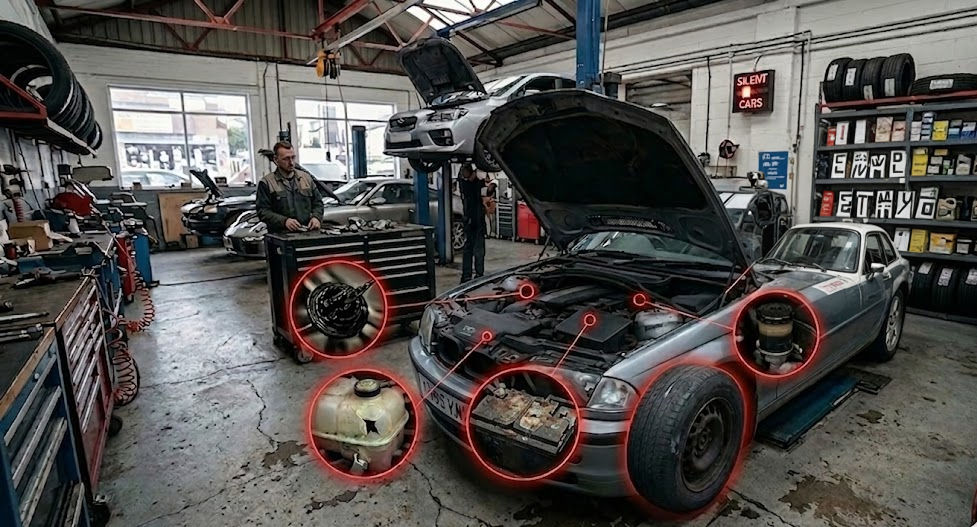
Not every car problem announces itself. The squealing brake pad, the grinding gearbox, the rattling exhaust - these at least give you a signal. They're telling you something is wrong in a language you can hear. What makes the automotive world's truly dangerous problems so insidious is that they communicate in a language most drivers don't check for: slowly degrading fluids, invisible corrosion, imperceptible wear, and chemistry that changes over thousands of kilometres without making a single sound.
The automotive industry and mechanics who deal with major repairs consistently point to the same culprit as the leading cause of preventable catastrophic failure: neglected engine oil. But it's not alone. There are several 'silent killers' in a car - problems that develop invisibly and strike suddenly - and understanding them is genuinely important for Australian drivers who might cover large distances between major towns, drive in extreme heat, or simply not think about their car until something goes wrong.
This guide covers every significant silent killer in Australian vehicles - what they are, how they cause damage, and what you can do to detect them before they cost you.
Primary Silent Killer in Cars - Degraded Engine Oil
Ask any experienced mechanic in Australia what single failure they see most often that was entirely preventable, and the answer is almost always the same: an engine destroyed by neglected oil. Not a dramatic sudden failure - a slow, quiet accumulation of damage that results in a car that one day simply won't start, or one that develops a terminal knock that signals internal damage too extensive to repair economically.
Here is what makes it silent: oil degradation is invisible and symptom-free until the damage is already significant. The engine doesn't knock because the oil is overdue - it feels and sounds normal right up to the point where wear has accumulated enough to cause permanent damage. By the time you hear anything unusual, the opportunity for inexpensive preventive action has often passed.
Old, degraded oil loses its ability to form a protective film between metal surfaces. Microscopic wear particles accumulate. The oil thickens with combustion byproducts. VVT (Variable Valve Timing) solenoids begin to clog. Sludge forms in the engine passages and oil pickup screen. And over thousands of kilometres of this degraded protection, bearing surfaces, camshaft lobes, and piston rings wear past their design tolerances.
Warning The Most Dangerous Attitude in Car Ownership
'It feels fine' is not a reliable indicator of engine oil condition. Oil that is significantly overdue for a change feels and sounds identical to fresh oil in most vehicles until substantial internal damage has occurred. The only way to know is to check it - on the dipstick, with your eyes, every month.
The Second Silent Killer - Coolant Neglect
Coolant doesn't just prevent freezing - it actively prevents corrosion inside the engine and cooling system, transfers heat from the engine to the radiator, and maintains a consistent operating temperature that keeps combustion efficient. As coolant ages, its corrosion inhibitor additives deplete. The coolant becomes increasingly acidic, and that acidity begins to attack aluminium components, rubber hoses, water pump seals, and the inside of the radiator.
The damage accumulates silently for years. Then one day - often on a hot summer's day, often while towing, often on a remote section of highway - the degraded coolant's reduced heat-transfer efficiency is no longer adequate for the conditions. The temperature gauge climbs. If the driver catches it and stops, the outcome is a tow truck and an overdue coolant flush. If they don't catch it - because they weren't watching the gauge, or because the warning came after the damage was already done - the outcome can be a warped cylinder head, a blown head gasket, or worse.
In Australian conditions, this is particularly relevant for northern drivers. Darwin, Cairns, the outback Queensland highway network - vehicles here run at sustained high temperatures year-round. Coolant that might last three years in Melbourne's climate may be significantly degraded in two years in tropical conditions. A coolant flush costs $150-$250. A replacement head gasket costs $1,500-$3,500 in labour alone.
The Third Silent Killer - Tyre Pressure
This one is almost too simple to seem like it belongs on a list of serious risks, which is exactly why it's so dangerous. Underinflated tyres are the most common vehicle defect on Australian roads, and the consequences of a tyre failure at highway speed - a blowout, a loss of control - are immediate and severe.
Underinflated tyres don't just increase blowout risk. They generate more heat (friction between the underinflated tyre and the road surface), which accelerates the tyre's internal structural degradation. They reduce fuel economy. They compromise handling and braking. And because a tyre that's 20% underinflated looks almost normal to a casual glance, most drivers have no idea their tyres are dangerous until something goes wrong
Temperature changes make this worse. For every 10-degree Celsius drop in ambient temperature, tyre pressure decreases by approximately 1 PSI. In Australian alpine areas (Snowy Mountains, Victorian High Country) where temperature swings between day and night can be significant, a tyre that's correctly inflated in the afternoon may be noticeably low the following morning. Check tyre pressure monthly, always when cold (before driving more than a few kilometres).
The Fourth Silent Killer - Brake Fluid Moisture Absorption
Brake fluid is hygroscopic - it absorbs moisture from the atmosphere through the brake system's rubber components and reservoirs. This is not a manufacturing flaw; it's an inherent characteristic of glycol-based brake fluid. The problem is what moisture does to the fluid: it progressively lowers the boiling point.
New DOT 4 brake fluid has a dry boiling point of approximately 230°C. After two years of typical use, absorbed moisture can drop this to around 155°C. Under hard braking - descending a long grade in the Dandenong Ranges, emergency braking on a hot Queensland summer day - brake fluid at 155°C boiling point can vapourise in the caliper. The vapour compresses, the pedal goes soft, and braking effectiveness is dramatically reduced. This is known as brake fade, and it's terrifying when it happens.
The silent part: brake fluid that's absorbed 3% moisture by weight feels and looks completely normal. The pedal feels normal. The brakes work normally in everyday use. There is no warning until you're in a situation that demands maximum braking performance. Replace brake fluid every two years regardless of kilometres.
The Fifth Silent Killer - Battery Degradation
Car batteries don't usually die with warning. The car starts fine on Monday. On Friday morning, it doesn't. The battery has been slowly losing capacity for months - possibly years - but because modern vehicles can crank an engine on a battery that's well below its rated capacity, the warning signs are often missed until the battery can no longer do the job at all.
In Australian heat, battery degradation happens significantly faster than in cool climates. The chemical reactions inside a lead-acid battery accelerate with temperature, and sustained high temperatures degrade the battery's plates and electrolyte. A battery that lasts 5-6 years in Hobart might last 2-3 years in Darwin. Starting a battery-related stranding at home is an inconvenience. Starting one in a remote location is a genuine safety issue.
Get your battery load-tested annually from the third year of ownership - most auto parts stores (Repco, Supercheap) do this for free. A load test applies a real-world starting current to the battery and measures how well it responds - far more informative than a simple voltage check, which can make a weak battery appear healthy.
The Silent Killers - Quick Reference
Degraded engine oil: kills engines quietly over thousands of km. Check monthly, change every 10,000 km.
Old coolant: causes corrosion and overheating. Flush every 2-3 years - more often in hot climates.
Low tyre pressure: invisible until a blowout. Check monthly, always cold.
Absorbed brake fluid: reduces boiling point until brakes fade under load. Replace every 2 years.
Battery degradation: fails without warning, often in the worst possible location. Load test annually from year 3.
Transmission fluid neglect: gearboxes fail quietly from degraded fluid. Change every 40,000-60,000 km.
Timing belt age: worn belt gives no warning before snapping. Failure destroys the engine. Never skip the service.
Frequently Asked Questions
How do I know if my coolant needs changing if everything seems fine?
Coolant condition can be checked by its color and clarity: healthy coolant is usually bright green, blue, pink, or orange and clear. Brown, rusty, or dirty coolant indicates a problem and may need more than a change. For a more accurate check, a mechanic can test its pH to see if it’s still protecting against corrosion. Color alone isn’t always reliable since some coolants naturally darken over time.
My car starts fine. Does that mean the battery is healthy?
A normal car start only shows the battery can crank the engine at that moment, not its overall health or reserve power. Temperature changes can still cause failure even if it seems fine. The most accurate check is a load test, which simulates engine starting under stress. Voltage checks alone aren’t enough. Batteries older than ~3–4 years should be tested proactively.
Can I detect coolant or oil problems before they cause a breakdown?
Check engine oil monthly using the dipstick to ensure the level is between min and max and the oil is amber to light brown, while black, gritty, or milky oil indicates a problem. Check coolant level and colour in the reservoir and inspect hoses and the radiator cap for leaks or deposits. Also look under the car after it has been parked overnight for any oil or coolant spots, as these can indicate developing leaks that need attention.
The Bottom Line
The silent killers in cars share one characteristic: they are all detectable with simple, free checks that most drivers simply don't do. Monthly dipstick checks, monthly tyre pressure checks, annual battery load tests, and scheduled fluid replacements - none of these require specialist tools or mechanical knowledge. What they require is the habit of actually doing them.
In Australian conditions, these habits matter more than in most markets. The heat, the distances, the isolation of much regional driving - all of these raise the stakes when something fails. The best protection is information - knowing your car's condition before it's forced upon you by a breakdown on a remote road in 40-degree heat.


Comments